How Commercial Kitchen Design Impacts Staff Productivity & Service Speed

A well-designed commercial kitchen does far more than create an organised workspace, it directly affects staff productivity, workflow efficiency, and service speed. In busy hospitality environments, poor layouts can lead to delays, communication issues, and unnecessary staff movement, all of which impact operational performance.
Whether planning a new kitchen or refurbishing an existing space, investing in professional commercial kitchen design can help businesses improve efficiency, reduce downtime, and create a more productive working environment.
Why Commercial Kitchen Design Matters
Commercial kitchens are fast-paced environments where multiple teams need to work efficiently within a limited space. Poor layouts can create bottlenecks, slow service, and increase pressure on staff during busy periods.
A professionally designed commercial kitchen considers:
- Workflow efficiency
- Equipment placement
- Storage accessibility
- Food hygiene compliance
- Staff safety
- Future scalability
The result is a kitchen that supports smoother operations and faster service.
How Kitchen Layout Improves Workflow Efficiency
One of the most important elements of commercial kitchen design is workflow planning. Staff should be able to move naturally between preparation, cooking, plating, washing, and storage areas without disruption.
Reducing Unnecessary Movement
When workstations and equipment are poorly positioned, staff spend more time moving around the kitchen than preparing or serving food. Over time, this can reduce productivity and slow service.
Efficient layouts help minimise:
- Cross-traffic between staff
- Congestion around cooking areas
- Delays accessing storage or refrigeration
- Repetitive movement during service
By streamlining movement throughout the kitchen, businesses can improve both efficiency and staff performance.
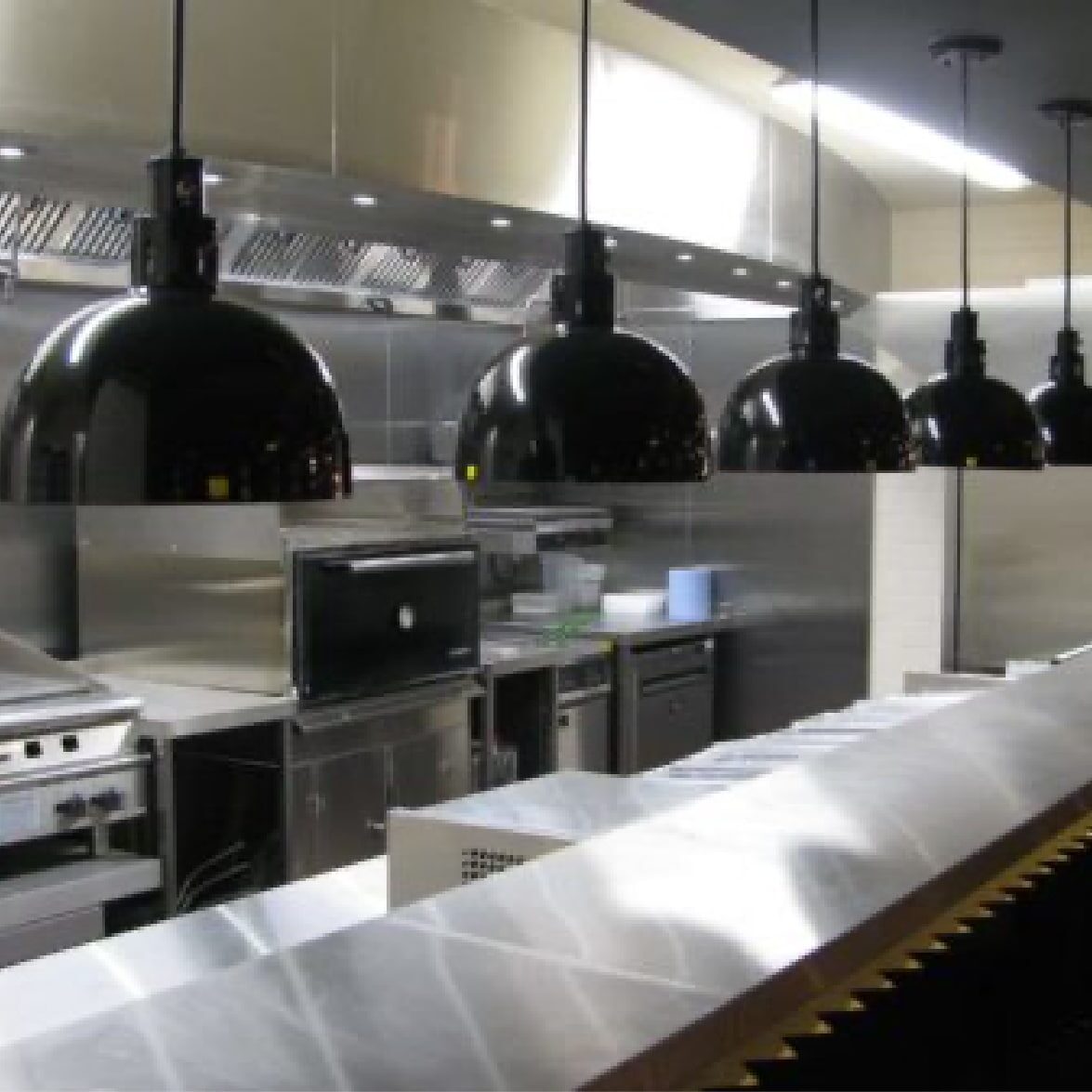
Creating Dedicated Work Zones
Professional commercial kitchen design often includes separate zones for:
- Food preparation
- Cooking
- Plating
- Cleaning
- Storage
Dedicated work areas allow teams to operate more effectively during busy service periods while reducing confusion and improving coordination.
The Importance of Equipment Placement
The positioning of commercial kitchen equipment plays a major role in operational efficiency.
Strategic Equipment Positioning
Frequently used equipment should be positioned close to relevant workstations. For example:
- Refrigeration should be located near preparation areas
- Dishwashing stations should be positioned near clearing areas
- Cooking equipment should follow a logical preparation sequence
Thoughtful equipment placement helps reduce delays and supports faster food preparation.
Choosing the Right Commercial Kitchen Equipment
Selecting equipment suited to the needs of the business is equally important. Restaurants, schools, healthcare facilities, and hotels all require different operational setups.
Energy-efficient and high-performance catering equipment can help businesses:
- Increase output during busy periods
- Reduce downtime
- Improve reliability
- Lower long-term running costs
At INOX, we work with leading manufacturers to supply commercial kitchen equipment tailored to each project’s requirements.
How Kitchen Design Supports Staff Productivity
Staff productivity is heavily influenced by the working environment. Poorly designed kitchens can contribute to stress, fatigue, and communication issues during service.
A practical commercial kitchen design should include:
- Adequate ventilation
- Effective lighting
- Safe working areas
- Accessible storage
- Comfortable working space
Clear sightlines and organised layouts also help improve communication between teams, particularly in high-volume hospitality environments where speed and accuracy are essential.
Future-Proofing Commercial Kitchens
A commercial kitchen should not only support current operational needs but also allow for future growth.
As businesses expand, kitchens may need to accommodate:
- Increased service volumes
- Additional equipment
- Larger teams
- Updated compliance requirements
Professional kitchen design helps ensure layouts remain efficient, practical, and adaptable over time.
Why Work with Commercial Kitchen Specialists
A commercial kitchen should not only support current operational needs but also allow for future growth.
Designing an efficient commercial kitchen requires industry knowledge, operational understanding, and careful planning. Working with experienced specialists helps ensure every aspect of the kitchen supports long-term business performance.
INOX provides complete commercial kitchen solutions, including:
- Commercial kitchen design
- Catering equipment supply
- Project management
- Commercial kitchen installation
- Temporary kitchen solutions
Our team works closely with clients across hospitality, education, healthcare, leisure, and commercial sectors to deliver kitchens designed for efficiency, productivity, and long-term operational success.
Final Thoughts
Commercial kitchen design has a direct impact on staff productivity and service speed. From workflow planning and equipment placement to safety and scalability, every design decision affects how effectively a kitchen performs.
Investing in professional commercial kitchen design can help businesses improve efficiency, reduce delays, and maintain consistent service standards during busy operating periods.

Share This: