Commercial Kitchen Compliance UK: Regulations, Design & Best Practice

Keeping a commercial kitchen compliant is becoming more demanding, with tighter regulations, rising energy costs, and increased scrutiny from inspectors. For UK operators, compliance now goes beyond basic requirements. It directly affects safety, efficiency, and long-term performance.
Whether you’re planning a new kitchen or upgrading an existing one, getting compliance right at the design stage will help avoid costly issues later.
Key Areas of Commercial Kitchen Compliance
Food Safety & Hygiene (HACCP)
HACCP-based procedures are a legal requirement in UK commercial kitchens and form the foundation of food safety.
Kitchen layout plays a key role. Poor workflow can increase the risk of cross-contamination, particularly where raw and cooked food areas are not clearly separated or staff movement is inefficient.
A well-designed kitchen should support HACCP through clear zoning and logical workflow, so safe practices are part of day-to-day operations.
Ventilation & Extraction Requirements
Ventilation is one of the most common areas where kitchens fall short.
Extraction systems should be designed in line with recognised industry guidance to effectively remove heat, grease, and fumes. They also need to be suitable for the equipment in use and accessible for cleaning and maintenance.
Underspecified systems can lead to:
- Excess heat and poor working conditions
- Grease build-up and hygiene risks
- Increased fire risk
These problems often only become clear after installation, when they are more expensive to fix.
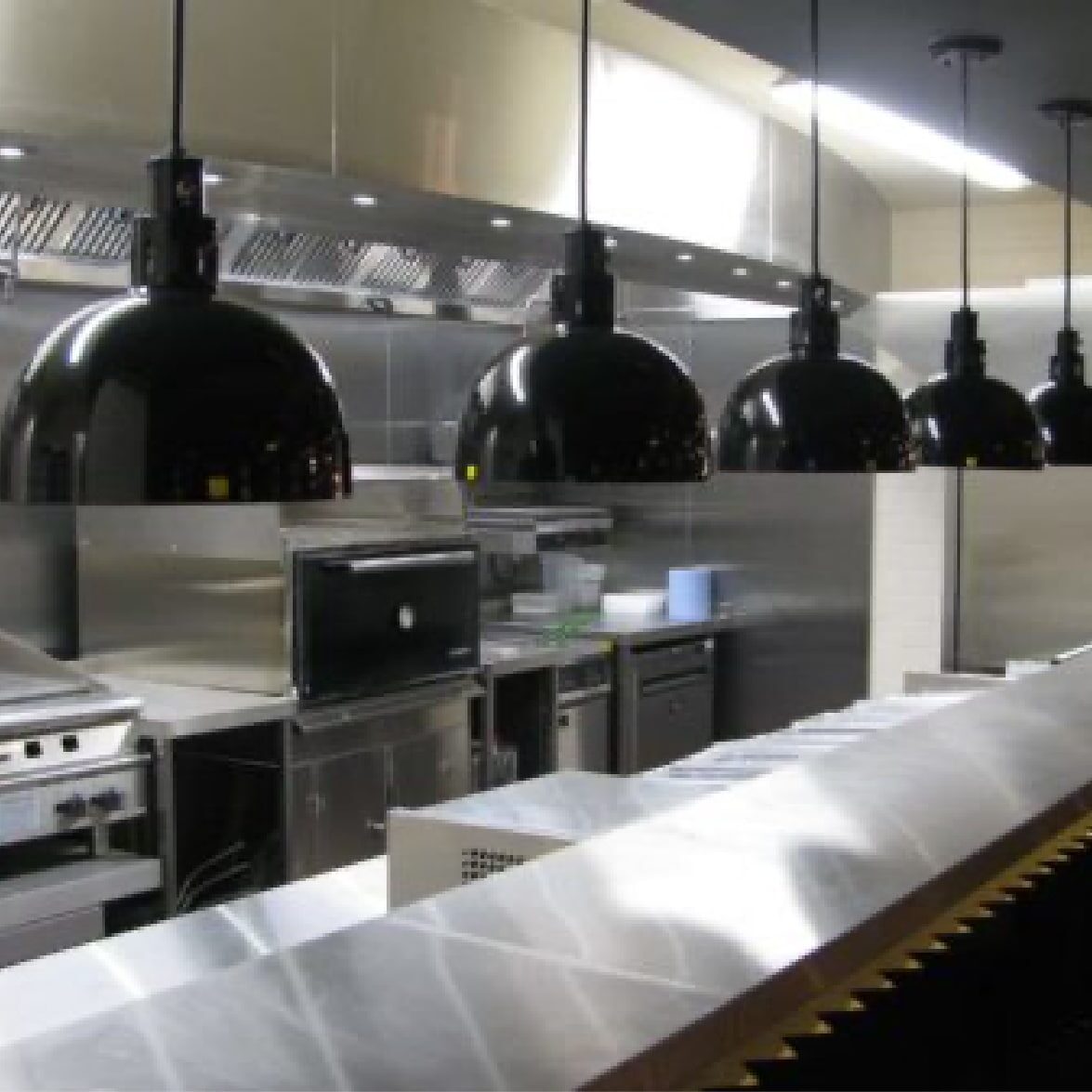
Fire Safety Requirements
Fire safety is a critical consideration, particularly in high-output kitchens.
Key considerations include:
- Appropriate fire safety measures based on the level of risk (which may include fire suppression systems)
- Safe positioning of cooking equipment
- Use of suitable materials and finishes
Kitchens that have been expanded over time are more likely to fall short. As operations grow, fire safety measures should be reviewed to ensure they remain appropriate.
Energy Efficiency & Sustainability
Energy efficiency is an increasingly important operational and regulatory consideration.
Modern kitchens are expected to:
- Use energy-efficient equipment
- Reduce wasted energy through effective layout
- Support wider sustainability targets where possible
For operators, this has a direct impact on running costs as well as compliance with broader building and energy standards.
Common Compliance Mistakes
Some of the most common issues seen in commercial kitchens include:
- Designing around space, not workflow
A kitchen may fit the available footprint, but if movement and processes aren’t considered, compliance issues can arise. - Underspecifying extraction systems
Cutting costs upfront often leads to systems that can’t cope with demand. - Retrofitting compliance features
Adding ventilation or safety systems after installation is far more disruptive than planning properly from the start. - Overlooking maintenance access
Systems need to be accessible for cleaning and servicing to remain compliant over time.
Why Compliance Should Start with Design
Compliance is most effective when it’s built into the design from the outset, not added later.
A well-planned commercial kitchen will consider:
- Workflow and equipment placement
- Ventilation requirements
- Fire safety measures
- Access for cleaning and maintenance
This approach not only supports compliance with UK regulations but also improves efficiency and reduces long-term costs.
Future-Proofing Your Commercial Kitchen
Regulations and operational demands will continue to change, so kitchens need to be adaptable.
Future-proofing involves:
- Designing layouts that can scale with demand
- Selecting equipment that meets current and emerging standards
- Allowing space for upgrades or additional systems
Planning ahead reduces the risk of disruption and helps maintain compliance over time.
Final Thoughts
Commercial kitchen compliance is no longer just about meeting minimum standards. It’s about creating a space that works safely and efficiently under pressure.
Getting it right from the start helps avoid costly issues and ensures the kitchen performs reliably day to day.
If you’re planning a new kitchen or upgrading an existing one, speak to the INOX Equip team about your project and how to build a compliant, future-ready space.

Share This: